

When European builders and contractors look for reliable material solutions for large-scale concrete projects, Concrete Formwork Plywood has become a go-to choice — and in recent years, Vietnamese Plywood has emerged as one of the most competitive options on the market.
In this post, we explore how Vietnamese plywood fits into European construction workflows, highlight real-world applications, and explain the advantages that make it attractive for project owners, site engineers, and procurement managers.
Concrete Formwork Plywood: What Is It?
Concrete formwork plywood is engineered timber designed specifically for creating molds or “forms” into which concrete is poured and cured. In Europe, these panels must meet strict performance and durability standards — typically aligned with local codes like EN 636 or EN 13986 — to ensure safety and reliability across varied climates and load conditions.
Unlike regular plywood, formwork plywood must:
- Resist moisture and repeated wetting
- Maintain flatness under heavy pressure
- Attach easily to support frames
- Withstand multiple reuses without delamination
This is where high-quality Vietnamese plywood enters the picture.
Why Vietnamese Plywood Is Gaining Ground in Europe
Over the past five years, Vietnam has grown into one of the world’s leading exporters of structural plywood. From Scandinavia to Central Europe, suppliers and distributors are bringing Vietnamese Concrete Formwork Plywood into mainstream usage for its combination of performance and cost advantages.
Here’s why European construction professionals are taking note:
1. Consistent Performance and Strength
Vietnamese plywood is produced from fast-growing plantation timber species that are bonded with strong, weather-resistant adhesives. These panels often feature:
- Uniform layers for high bending strength
- Good screw retention
- Excellent impact resistance
Because formwork systems are only as reliable as their panels, this quality matters for both structural integrity and worker safety.
2. Competitive Cost Without Sacrificing Quality
European formwork plywood is typically sourced from Scandinavian or North American mills — and while quality there is excellent, prices are comparatively high.
Vietnamese Plywood, on the other hand, offers:
- Lower raw material and processing costs
- Competitive freight options via major ports
- Economies of scale from export volume
This cost advantage helps contractors stay within budget — particularly on large construction projects like highways, tunnels, commercial buildings, and infrastructure.
3. High Reuse Life and Sustainability
One major factor for European buyers is sustainability and lifecycle efficiency.
- Vietnamese mills increasingly certify pulp sources and manufacturing processes
- Many panels meet EUTR compliance and chain of custody requirements
- Good quality formwork plywood can be reused 10–15+ cycles with proper care
This reuse ability reduces waste and project material costs — a big win for green building initiatives and long-term ROI.
Typical Applications in European Projects
Vietnamese plywood sees wide use across major construction segments:
Heavy Civil Engineering
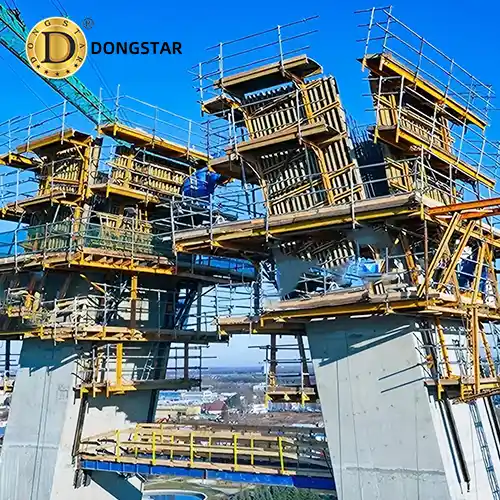
Projects such as bridges, viaducts, dams, and tunnels require formwork that can resist high pressure and deliver consistent concrete surface finishes.
Multi-Storey Building Construction
From commercial complexes to high-rise residential buildings, formwork plywood provides the flat, stable surfaces needed for walls, slabs, and beams.
Industrial Infrastructure
Factories, logistics hubs, and public facilities often require large-scale panel systems where repeatability and speed matter — another area where Vietnamese plywood performs well.
Road and Rail Projects
Curved or angled formwork shapes are common in infrastructure work. High-quality plywood panels help achieve these forms with fewer joints and less material waste.
Real Benefits for Project Teams
Contractors and site teams report tangible advantages when using Vietnamese concrete formwork plywood:
- Faster setup and dismantling
- Smoother finish on poured concrete
- Fewer panel replacements per job
- Better value across project lifecycle
For procurement and estimating teams, the improved balance of cost and quality helps with more accurate bid proposals and tighter project margins.
Challenges and Considerations
While the benefits are strong, buyers should still consider a few project-specific factors:
- Moisture protection: Ensure proper curing and drying between reuse cycles
- Certification: Check compliance with EU timber regulations (EUTR)
- Supplier vetting: Work with experienced distributors familiar with European standards
These considerations are standard wherever formwork plywood is used — and Vietnamese plywood is no exception.
Final Thoughts
Vietnamese concrete formwork plywood has clearly earned a place in Europe’s construction supply chain. Its strengths — consistent structural performance, competitive pricing, sustainability credentials, and multiple reuses — align with the core needs of modern building projects.
For European project managers, structural engineers, and purchasing professionals, Vietnamese plywood offers a practical balance between value and performance — especially when sourced from reputable suppliers and integrated with proven formwork systems.