

When ordering plywood by the container, sheet size may look like a small specification. It isn’t.
For a European importer buying several hundred or several thousand panels, the difference between 1220×2440 plywood and 1250×2500 plywood can affect cutting plans, material yield, pallet configuration, container volume, handling, and ultimately the landed cost of every sheet.
Both dimensions are widely available in international plywood supply chains. Dongstar Wood, for example, currently offers both 1220×2440mm and 1250×2500mm across its commercial and specialty plywood range, with thicknesses from 3mm to 40mm depending on the product.
So, which size should a European project buyer, wholesaler, furniture manufacturer, or plywood importer choose?
The short answer is simple:
Choose 1220×2440mm when your cutting plans, existing equipment, or customer specifications are based around the 4×8 format. Choose 1250×2500mm when the extra panel area and metric format better match your production or project requirements.
But there is more to the decision than that.
Why Plywood Sheet Size Matters More Than You Think
A plywood sheet isn’t just a piece of wood. It is part of a production and logistics system.
The dimensions influence:
How much surface area each sheet covers
How many pieces can be cut from one panel
How much offcut is generated
How panels are stored
How they are transported
How many panels are needed for a project
How the material fits existing machinery
How much plywood is required per container
This is especially important for B2B buyers because a seemingly minor specification difference becomes significant at container scale.
For example, 1220×2440mm plywood covers approximately 2.9768 m² per sheet, while 1250×2500mm plywood covers 3.125 m².
That means the 1250×2500mm panel provides about 4.98% more surface area per sheet.
That extra area can be useful. But it doesn’t automatically mean 1250×2500mm is the better choice.
The right size depends on what you are manufacturing or building.
What Is 1220×2440 Plywood?
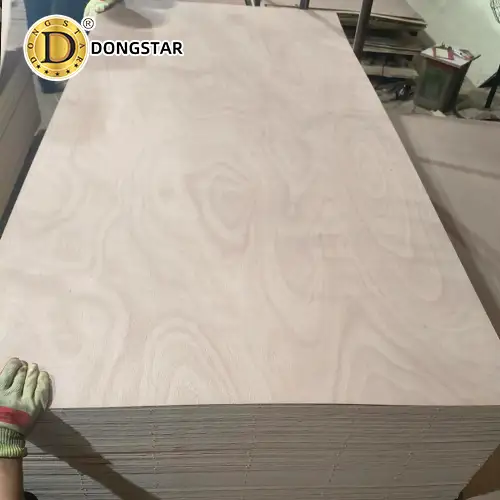
1220×2440 plywood is one of the most recognizable plywood formats in international trade. It is approximately equivalent to the familiar 4×8-foot sheet, although the metric dimensions are the actual specification buyers should use when ordering.
Dongstar Wood lists 1220×2440mm as a standard option across several Vietnam plywood products, including commercial plywood, pine plywood, birch plywood, and other specialty panels.
The format is useful for:
Furniture production
Cabinets
Shelving
Interior panels
General construction
Packaging
CNC processing
OEM plywood production
For buyers already working with 1220mm-wide processing equipment, switching to another format may create unnecessary changes.
In other words, 1220×2440 plywood remains a practical choice when your production system is already designed around it.
What Is 1250×2500 Plywood?
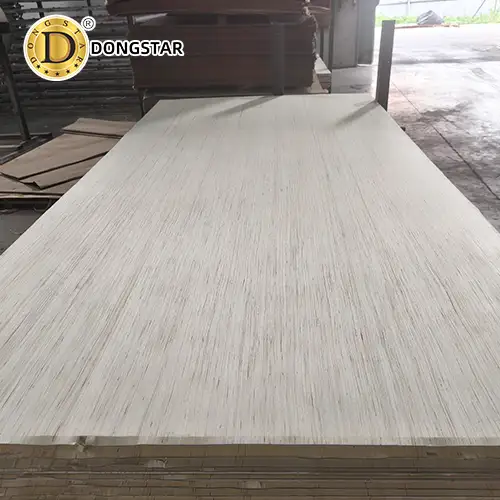
1250×2500 plywood is a larger metric-format panel measuring 1.25m × 2.50m.
It provides 3.125 m² of panel area, compared with approximately 2.9768 m² for a 1220×2440mm sheet.
The format is particularly relevant to European buyers because 1250×2500mm panels are widely offered by European plywood distributors and building-material suppliers. Current European product listings include 1250×2500mm plywood in 18mm thickness, while European panel catalogues also list 1250×2500mm film-faced plywood in several thicknesses.
For some projects, that additional panel area means fewer sheets are required.
But there is an important catch:
More area per sheet does not necessarily mean lower total landed cost.
Freight, pallet configuration, cutting yield, product weight, and project requirements still need to be considered.
1220×2440 vs 1250×2500: The Key Difference
The easiest way to understand the difference is to compare the basic dimensions.
| Specification | 1220×2440mm | 1250×2500mm |
|---|---|---|
| Length | 2440mm | 2500mm |
| Width | 1220mm | 1250mm |
| Area per sheet | 2.9768 m² | 3.125 m² |
| Approx. area advantage | Baseline | +4.98% |
| Typical market use | International / 4×8 format | Metric / European applications |
| Best starting point | Existing 4×8 cutting plans | Larger metric panel requirements |
The difference in area is easy to calculate, but purchasing decisions should go further.
Sheet Area Comparison
At the same thickness, a 1250×2500mm sheet provides approximately 4.98% more surface area than a 1220×2440mm sheet.
For example, imagine a project that needs approximately 2,976.8 m² of panel surface.
At a simple theoretical area calculation:
- 1,000 sheets of 1220×2440mm = 2,976.8 m²
- 1,000 sheets of 1250×2500mm = 3,125 m²
However, real production yield depends on the dimensions of the parts being cut.
This is where experienced buyers need to be careful.
A larger sheet can be more efficient for one cutting pattern and less efficient for another.
Weight and CBM Considerations
Panel dimensions also affect cubic volume.
At 18mm thickness:
1220×2440mm × 18mm = approximately 0.05358 m³ per sheet.
1250×2500mm × 18mm = approximately 0.05625 m³ per sheet.
So an 18mm 1250×2500mm panel occupies roughly 4.98% more cubic volume than an 18mm 1220×2440mm panel at the same thickness.
This matters when planning container loads.
It also means buyers should not simply copy a container-loading calculation from one size to another.
A European plywood importer should ask the supplier for a size-specific packing list and loading plan before confirming a large order.
Which Plywood Size Is Better for European Buyers?
There is no universal winner.
For European B2B buyers, the decision should be based on four questions:
- What does the end customer require?
- What size does the production line handle efficiently?
- Which format produces the lowest cutting waste?
- What does the complete landed cost look like?
European markets commonly use metric panel dimensions, and current European supplier catalogues show 1250×2500mm as an active commercial format. At the same time, 1220×2440mm remains widely available in European distribution and plywood supply chains.
So don’t choose a size simply because it is called a “European size.”
Choose the size that works best for your actual application.
When Should You Choose 1220×2440 Plywood?
1220×2440 plywood is often the better choice when:
- Your CNC machine is configured for 1220mm-wide panels.
- Your existing products are designed around 4×8 sheets.
- Your cutting diagrams are optimized for 2440mm length.
- Your customers already specify 1220×2440mm.
- You need compatibility with existing inventory.
- The smaller panel produces better cutting yield.
This can be particularly useful for furniture manufacturers and OEM buyers.
If your factory already processes thousands of 1220×2440mm panels each month, changing dimensions just to gain approximately 5% more area may not make economic sense.
Production efficiency comes first.
When Should You Choose 1250×2500 Plywood?
1250×2500 plywood becomes attractive when:
- Your customer specifies metric European dimensions.
- Larger panels reduce joints in the finished product.
- Your cutting pattern benefits from the extra 150mm in length and 30mm in width.
- You want more usable area per panel.
- Your construction or formwork system is designed for this format.
- Your European distributor already stocks this dimension.
For certain large furniture components, wall panels, doors, flooring components, and construction applications, the additional surface area can reduce the number of panels required.
But again, the cutting plan should be checked before making the final decision.
18mm Plywood 1220×2440 vs 18mm Plywood 1250×2500
This is one of the most commercially important comparisons for B2B plywood buyers.
18mm plywood 1220×2440 and 18mm plywood 1250×2500 have the same nominal thickness but different panel areas.
At 18mm:
| Specification | 18mm 1220×2440 | 18mm 1250×2500 |
|---|---|---|
| Area | 2.9768 m² | 3.125 m² |
| Volume/sheet | ~0.05358 m³ | ~0.05625 m³ |
| Area difference | — | ~4.98% larger |
| Typical advantage | Familiar format | More panel area |
The larger panel can reduce sheet count for some applications.
However, the buyer should compare:
- Price per sheet
- Price per m²
- Price per m³
- Container loading
- Cutting yield
- Expected waste
- Product weight
- Local handling requirements
Price per sheet alone is not enough.
Furniture and Cabinet Manufacturing
For furniture manufacturers, sheet size is closely connected to cutting efficiency.
Imagine a cabinet manufacturer producing:
- Side panels
- Door panels
- Shelves
- Back panels
- Drawer components
The best sheet size is the one that creates the highest yield from the cutting plan.
A 1250×2500mm sheet may provide more flexibility for larger components. On the other hand, a 1220×2440mm panel may produce less waste if the factory’s standard parts were originally designed around the 4×8 format.
This is why professional furniture buyers should send their cutting list to the plywood manufacturer before placing a large order.
A factory can then recommend the most suitable panel size instead of simply quoting two standard dimensions.
Construction and Formwork Applications
Construction buyers have different priorities.
For general construction plywood, important factors include:
Panel dimensions
Thickness
Glue system
Core construction
Surface grade
Structural requirements
For film-faced plywood, size can also affect formwork layout and the number of panel joints.
Dongstar Wood currently offers film-faced plywood in 1220×2440mm and 1250×2500mm, as well as larger formats and customized dimensions.
For contractors, the decision should therefore be based on the actual formwork system rather than assuming that the larger sheet is always better.
Container Loading and Freight Costs
This is where many first-time importers make a costly mistake.
A plywood quotation should not be evaluated without understanding how the panels will be packed.
For each size, ask the supplier for:
Sheets per pallet
Pallet dimensions
Pallet weight
Number of pallets per container
Total sheets per container
Total CBM
Gross weight
Net weight
For the same thickness, a 1250×2500mm sheet occupies more volume than a 1220×2440mm sheet.
Therefore, the number of sheets per container may differ.
For large B2B orders, ask for a container loading simulation before confirming the purchase order.
This simple step can prevent unpleasant surprises later.
How to Specify Plywood Correctly
Instead of sending a supplier a message saying:
“Please quote 18mm plywood.”
Give the supplier a complete specification.
For example:
Product: Commercial plywood
Size: 1250×2500mm
Thickness: 18mm
Face/back: Birch
Core: Eucalyptus/Acacia/Combi
Glue: E1 or WBP, depending on application
Grade: As agreed
Moisture: As agreed
Certification: FSC if required
Quantity: Full-container order
Packaging: Export standard
Destination: European port
This makes quotations much easier to compare.
It also reduces the risk of comparing two products that only look similar on paper.
Common Buying Mistakes
Mistake 1: Comparing Only the Price per Sheet
A cheaper 1220×2440mm panel is not necessarily cheaper per square metre.
Always normalize the quotation.
Mistake 2: Assuming 1250×2500mm Is Always Better
The larger panel provides more area, but your cutting equipment may not use it efficiently.
Mistake 3: Ignoring Finished Dimensions
Ask whether the quoted dimensions are nominal or finished dimensions after sanding and processing.
Mistake 4: Forgetting Container Volume
The larger panel uses more cubic volume at the same thickness.
Mistake 5: Not Checking Cutting Yield
A small change in sheet dimensions can make a surprisingly large difference in production waste.
Mistake 6: Mixing Specifications Between Suppliers
Always compare identical:
Size
Thickness
Core
Glue
Face grade
Tolerance
Certification
Otherwise, the “cheapest” quotation may simply be a lower-specification product.
Why Source Both Sizes from Vietnam?
Vietnamese plywood manufacturers can provide multiple dimensions for international buyers.
Dongstar Wood currently lists both 1220×2440mm and 1250×2500mm across its commercial plywood range, with custom sizes also available. Its product portfolio includes birch, pine, eucalyptus, acacia, poplar, combi-core and other plywood configurations.
This flexibility is useful for European distributors because one supplier can potentially support different customer requirements.
For example:
Customer A → 1220×2440mm
Customer B → 1250×2500mm
Customer C → Custom dimensions
Furniture customer → Birch-faced plywood
Construction customer → Film-faced plywood
That is more efficient than maintaining separate suppliers for every format.
Why Choose Dongstar Wood for 1220×2440 and 1250×2500 Plywood?
Dongstar Wood positions itself as a Vietnam-based B2B plywood manufacturer with a broad export product range.
Its current product specifications show:
1220×2440mm standard option
1250×2500mm standard option
Custom dimensions
3–40mm thickness range for commercial plywood
Birch, Pine, Eucalyptus, Acacia, Poplar and other core options
E0, E1, E2, MR, WBP and phenolic glue options depending on product
For European buyers, the more important point is flexibility.
Instead of asking, “Which size do you sell?”, ask:
“Which size gives my project the best combination of yield, logistics, performance, and landed cost?”
That is the question a professional plywood supplier should help you answer.
FAQs
It is the common metric equivalent of the 4×8-foot format and is widely traded as a 1220×2440mm panel. Buyers should specify the metric dimensions in purchase orders rather than relying only on the "4×8" description.
Not automatically. 1250×2500mm is a widely available metric format in European plywood distribution, but the best size depends on the project, cutting plan, machinery, and customer specification.
1250×2500mm is larger. It provides approximately 3.125 m² per sheet versus 2.9768 m² for 1220×2440mm, or about 4.98% more surface area.
Yes. Both sizes are commercially available, and Dongstar Wood lists both dimensions across its plywood product range. European suppliers also list 18mm 1250×2500mm panels.
It depends on the cutting plan. A furniture manufacturer should compare sheet yield and offcut percentage rather than choosing solely by nominal sheet size.
Use the size specified by the project or formwork system. For film-faced plywood, both 1220×2440mm and 1250×2500mm are available, and larger custom formats may also be possible.
Final Recommendation: Which Plywood Size Should You Choose?
There is no single answer for every buyer.
Choose 1220×2440 plywood if:
Your machinery is designed around 1220mm panels.
Your cutting patterns already use 2440mm sheets.
Your customers request the 4×8 format.
The smaller panel produces better material yield.
Existing inventory and packaging are standardized around this size.
Choose 1250×2500 plywood if:
Your customers prefer metric European dimensions.
Larger panels improve cutting efficiency.
Your project requires more surface area per sheet.
Your construction or formwork system uses this format.
The additional panel area reduces the total number of sheets required.
For large B2B orders, do one more calculation
Don’t compare only the FOB price per sheet.
Compare:
Price per m² + cutting yield + sheets/container + freight + import costs + usable product performance.
That is the number that matters.
For European importers, wholesalers, contractors, and furniture manufacturers, the best plywood size is ultimately the one that fits the entire supply chain, from factory production to final installation.
If you are comparing 18mm plywood 1220×2440 with 18mm plywood 1250×2500, send the supplier your intended application and cutting requirements. A professional manufacturer should be able to provide a product specification, packing plan, and quotation for both formats so you can make a genuine like-for-like comparison.
Related Articles
- All Posts
- Company News
- Product Post
For European plywood importers, wholesalers and project contractors, sheet size is more than a simple...
European plywood buyers are facing a new sourcing reality. For years, China was one of...
When ordering plywood by the container, sheet size may look like a small specification. It...
The global plywood market is changing. European construction companies, furniture manufacturers, distributors, and wholesalers are...
Film Faced Plywood Price Trends in Europe 2026: A Practical Guide for Importers and Contractors...
Why EU Importers Are Switching to Vietnam Plywood Suppliers Faster Than Ever Over the past...