

For European furniture manufacturers, interior contractors, wholesalers and plywood importers, choosing a decorative plywood is no longer only about appearance. Buyers increasingly want a panel that looks consistent, performs reliably, is available in bulk and can be supplied with the documentation required for the European market.
That is where Engineered Veneer Plywood, also known as EV Plywood, is attracting more attention.
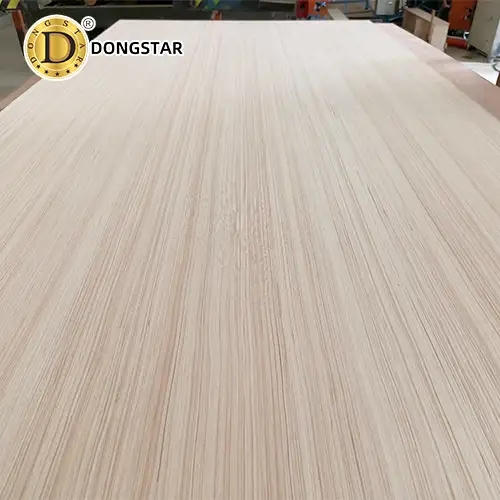
Unlike conventional natural veneer plywood, engineered veneer is manufactured to achieve a more controlled appearance. The result is a plywood surface with greater consistency in colour and grain, making it particularly interesting for furniture production, cabinetry, interior panels and large commercial projects.
For B2B buyers, the bigger question is not simply “What is EV plywood?” It is whether this material can deliver the right combination of appearance, stability, price and supply consistency for repeated orders.
What Is Engineered Veneer Plywood and Why It’s Trending in Europe
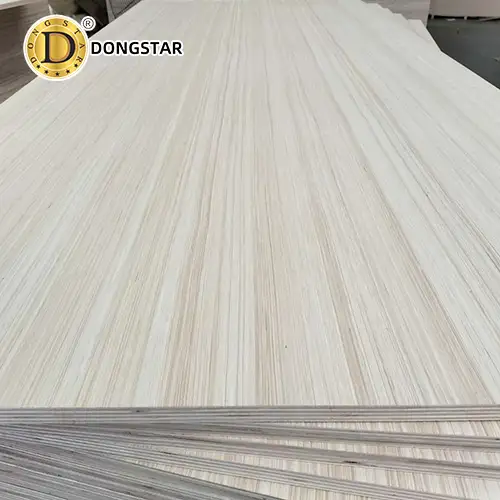
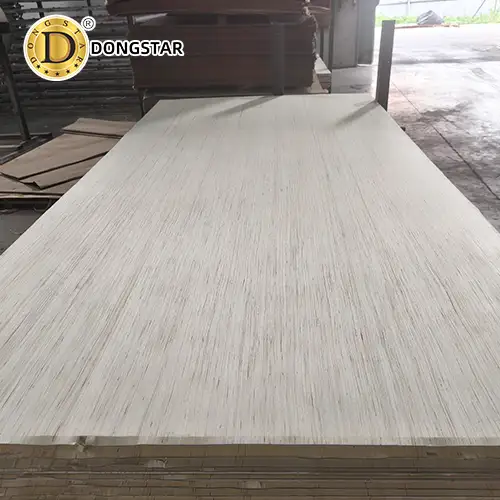
Engineered Veneer Plywood is plywood faced with engineered wood veneer manufactured from selected wood materials and processed to create a controlled visual pattern. Instead of relying entirely on the natural variation of individual timber logs, engineered veneer is designed to provide a more uniform surface.
This makes EV Plywood different from ordinary natural veneer plywood in one important way: appearance can be controlled more consistently from panel to panel.
For large-volume furniture production or commercial interior projects, that consistency matters. A buyer may need thousands of panels for wardrobes, hotel furniture, office interiors or retail fixtures. Significant variation between batches can increase sorting, cutting and finishing costs.
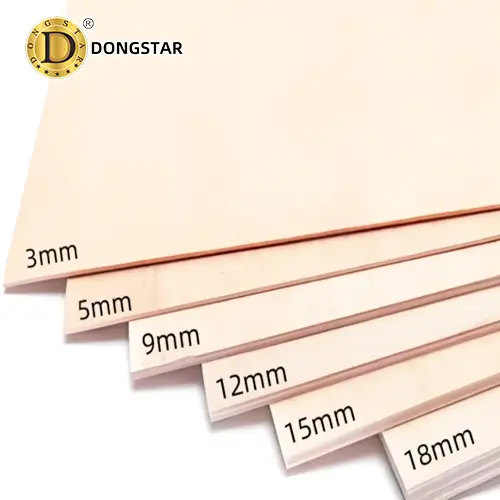
Dongstarwood‘s current EV Plywood range includes EV, Red EV, Poplar EV and Pine EV face options, with plywood cores including birch, eucalyptus, acacia, white hardwood, rubber and combi core. Available thicknesses range from 3mm to 40mm, with standard sizes including 1220×2440mm and 1250×2500mm, as well as customized specifications.
Why Are European Buyers Paying More Attention to EV Plywood?
There are several practical reasons.
1. More Consistent Appearance
Natural wood is beautiful partly because every tree is different. However, that natural variation can become a problem in mass production.
Engineered veneer plywood allows manufacturers to control colour and grain more closely. This can make it easier to maintain a consistent appearance across:
Kitchen cabinets
Wardrobes
Office furniture
Hotel furniture
Wall panels
Retail fixtures
Interior doors
Commercial fit-out projects
For European furniture manufacturers, consistency can be more valuable than having every panel look completely unique.
2. Better Material Utilisation
Engineered veneer production can make more efficient use of fast-growing wood resources and reduce some of the material variation associated with natural veneer processing.
For B2B buyers, this can translate into more predictable production and less material sorting.
Dongstar’s product information also highlights improved wood utilisation compared with traditional natural wood processing, which is one reason engineered veneer is increasingly positioned as a practical decorative material rather than simply a low-cost substitute for natural veneer.
3. Stable Supply for Large Orders
European importers normally have a different purchasing priority from individual consumers.
When buying one or two sheets, appearance variation may not matter much. When buying several containers, it becomes critical.
A suitable Engineered Veneer Plywood supplier should therefore be able to provide:
Stable veneer appearance
Consistent plywood construction
Repeatable specifications
Reliable production capacity
Quality inspection
Export documentation
Custom sizes and thicknesses
Long-term supply capability
These factors are particularly important for wholesalers and furniture manufacturers with repeat orders.
Red EV Plywood vs Natural Veneer Plywood: What Is the Difference?
One of the most searched and commercially interesting EV options is Red EV Plywood.
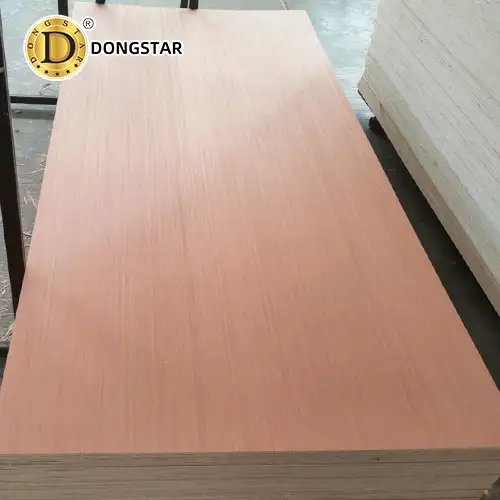
Red EV is an engineered veneer surface with a warm reddish appearance. It can provide a decorative wood look while offering the consistency expected from engineered veneer.
The key difference is not simply colour.
| Feature | Red EV Plywood | Natural Veneer Plywood |
|---|---|---|
| Colour consistency | High | More natural variation |
| Grain consistency | Controlled | Naturally variable |
| Large-volume production | Suitable | Requires more sorting |
| Appearance matching | Easier | More difficult |
| Customisation | Flexible | Depends on natural veneer |
| B2B repeat orders | Highly suitable | Suitable but requires strict sorting |
| Cost control | More predictable | Can vary by species and veneer quality |
For a hotel chain, furniture collection or commercial interior project, this difference can be significant.
The goal is not necessarily to replace natural veneer in every application. Instead, Red EV Plywood gives manufacturers another option when appearance consistency and purchasing efficiency are important.
What Are the Main Applications of EV Plywood?
The strongest market opportunity for EV Plywood is in decorative and furniture-related applications rather than heavy structural construction.
Furniture Manufacturing
EV plywood can be used for furniture panels where a consistent wood appearance is required.
Typical applications include:
Cabinets
Wardrobes
Tables
Shelving
Storage units
Bedroom furniture
Office furniture
For OEM furniture manufacturers, consistent surface appearance can help reduce production adjustments and simplify finishing.
Kitchen Cabinets and Wardrobes
Cabinet manufacturers often purchase plywood in significant quantities and need predictable surface quality.
Engineered Veneer Plywood is particularly attractive when a project requires a consistent decorative finish across many cabinet doors and panels.
Hotel and Commercial Interiors
Hotels, restaurants, offices and retail stores often require hundreds or thousands of matching panels.
Red EV Plywood can be considered for:
Decorative wall panels
Furniture
Reception counters
Partitions
Cabinet systems
Interior doors
Display fixtures
Interior Decoration
Engineered veneer plywood can also be used as a decorative panel for interior projects where designers want the visual warmth of wood without the large variation found in some natural veneer products.
What Sizes and Thicknesses Are Available?
For European B2B buyers, dimensions should be discussed before requesting a quotation because sheet size affects container loading, cutting efficiency and material waste.
Dongstarwood currently lists:
1220×2440mm
1250×2500mm
Customized sizes
3mm–40mm thickness
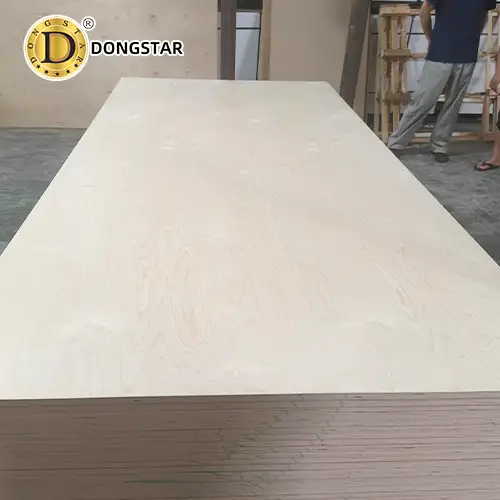
Different core constructions are also available, including birch, eucalyptus, acacia, white hardwood, rubber and combi core. Glue options include E0, E1, E2, MR, WBP and phenolic glue.
For a project order, buyers should specify the required:
Size + thickness + face veneer + core + glue + emission level + quantity + application.
This gives the manufacturer enough information to quote the correct construction instead of providing a generic plywood price.
Is EV Plywood Suitable for European Projects?
Yes, but buyers should select the specification according to the actual application.
For furniture and interior projects, factors such as formaldehyde emissions, moisture resistance, surface quality and traceability should be confirmed before ordering.
Dongstarwood lists E0/E1/E2, MR, WBP and phenolic glue options and identifies FSC, CE, SGS, EUDR, CARB and EPA-related certification capabilities for its EV Plywood range. Buyers should confirm the exact certification and test documentation applicable to the specific product specification and destination country before placing an order.
This point is important for European importers. A certificate shown on a supplier’s general website does not automatically mean that every plywood specification is covered by that certificate.
Professional buyers should request the relevant test report, certificate and technical data sheet for the exact product being purchased.
Why Source Engineered Veneer Plywood from Vietnam?
Vietnam has become an increasingly important plywood manufacturing and export base for European buyers.
For importers, the attraction is not simply factory pricing. Buyers are also looking for stable production, export experience, flexible specifications and supply-chain diversification.
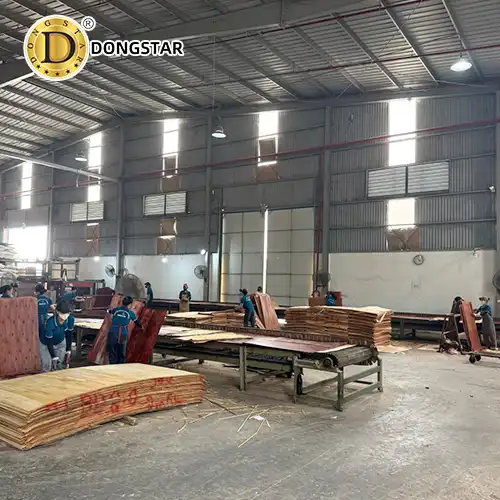
Dongstarwood positions its Vietnam operation around large-scale manufacturing, export-oriented quality control, FSC and CE certification, EUDR readiness and OEM/custom plywood production. Its current website states that the factory has a 48,000 m² production facility and more than 30 years of plywood manufacturing experience at group level.
For European B2B buyers, this can be particularly relevant when the purchasing requirement is not one container but a long-term supply programme.
What Should Buyers Check Before Ordering EV Plywood?
Price should not be the only comparison point.
Before choosing an Engineered Veneer Plywood supplier, European buyers should ask for the following information:
1. Face Veneer Specification
Ask whether the product is Red EV, White EV, Poplar EV, Pine EV or another engineered veneer.
2. Core Construction
Confirm the core species and construction. Eucalyptus, birch, acacia, hardwood and combi cores can have different performance and price characteristics.
3. Thickness Tolerance
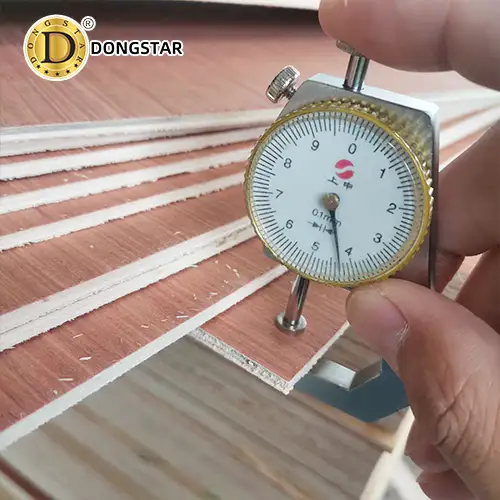
Nominal thickness is not enough. Ask for the actual thickness tolerance and production standard.
4. Moisture and Formaldehyde Requirements
For furniture and interior applications, confirm moisture content and formaldehyde emission requirements before production.
5. Certification and Traceability
For EU imports, request the relevant FSC, EUDR and testing documentation where applicable.
6. Samples Before Bulk Production
A sample can reveal surface colour, grain pattern, sanding quality, bonding quality and overall appearance much more accurately than photographs.
7. Production Consistency
If the project will require repeated shipments, ask how the manufacturer controls colour and appearance consistency between production batches.
Is Red EV Plywood a Good Alternative to Natural Wood Veneer?
For many B2B applications, yes.
However, it should be viewed as a different material solution rather than simply a cheaper version of natural veneer plywood.
Natural veneer remains attractive when buyers want the unique character of real timber. Engineered veneer becomes more attractive when the priority is repeatability, controlled appearance, efficient production and stable supply.
For large-scale furniture and interior projects, those advantages can directly affect production efficiency and purchasing costs.
FAQ: Engineered Veneer Plywood for European Buyers
EV plywood generally means Engineered Veneer Plywood. It uses engineered veneer as the decorative face of a plywood panel to provide a more controlled and consistent appearance.
Red EV Plywood is engineered veneer plywood with a reddish decorative surface. It is suitable for furniture, cabinets, wall panels and commercial interior applications where a warm wood appearance is desired.
Engineered veneer is wood-based material manufactured and processed to achieve a controlled appearance. It is different from a single naturally occurring wood veneer because the colour and grain pattern are engineered during production.
Common sizes include 1220×2440mm and 1250×2500mm, while customized dimensions may also be available depending on production requirements.
Yes. Buyers can discuss customized face veneer, core material, thickness, glue type, dimensions and packaging with the manufacturer. For large-volume projects, OEM specifications should be confirmed before production.
Yes, it can be suitable for European furniture and interior projects when the plywood construction, emissions, certification and traceability meet the buyer's specific requirements. Always request documentation for the exact specification being purchased.
Final Thoughts: Is EV Plywood Worth Considering?
The growth of Engineered Veneer Plywood is easy to understand from a B2B perspective.
European buyers need decorative plywood that looks good, performs consistently and can be supplied repeatedly at a commercially reasonable cost. Natural veneer will continue to have an important place in premium furniture and interior design, but engineered veneer provides an attractive alternative when consistency and production efficiency become priorities.
For importers, wholesalers and project buyers, EV Plywood and Red EV Plywood are therefore worth considering when evaluating Vietnam plywood suppliers for furniture, cabinetry and commercial interior projects.
If you are sourcing EV Plywood in bulk, the best starting point is not simply asking for a price. Send the required size, thickness, face, core, glue, certification, quantity and application to the manufacturer. This allows the supplier to recommend a construction that fits both your project and your target market.
Dongstarwood supplies EV Plywood from Vietnam with customized sizes, thicknesses, core materials and glue options for international B2B buyers.
Related Articles
- All Posts
- Company News
- Product Post
For European plywood importers, wholesalers and project contractors, sheet size is more than a simple...
European plywood buyers are facing a new sourcing reality. For years, China was one of...
1250×2500 Plywood Vietnam: The Complete 12mm, 15mm & 18mm Buying Guide for European B2B Buyers...
When ordering plywood by the container, sheet size may look like a small specification. It...
The global plywood market is changing. European construction companies, furniture manufacturers, distributors, and wholesalers are...
Why EU Importers Are Switching to Vietnam Plywood Suppliers Faster Than Ever Over the past...