

For European plywood importers, wholesalers and project contractors, sheet size is more than a simple measurement. It affects cutting efficiency, material waste, transport, handling and the final cost of a project.
One size that deserves attention is 1250×2500 plywood.
The 1250×2500mm format provides a larger working surface than the widely used 1220×2440mm sheet. For some furniture, construction and industrial applications, that extra surface can reduce joints and improve material utilization.
But is 1250×2500 plywood a standard size? What thicknesses are available? Is it suitable for European projects? And when should buyers choose it instead of 1220×2440 plywood?
This guide answers these questions from a practical B2B purchasing perspective.
Quick answer: 1250×2500 plywood is a large-format plywood sheet measuring approximately 1.25m × 2.5m. It is available in different plywood grades and thicknesses, including commonly requested 12mm, 15mm and 18mm options. Its suitability for European projects depends on the plywood’s construction, wood species, glue, performance requirements, documentation and intended application—not size alone.
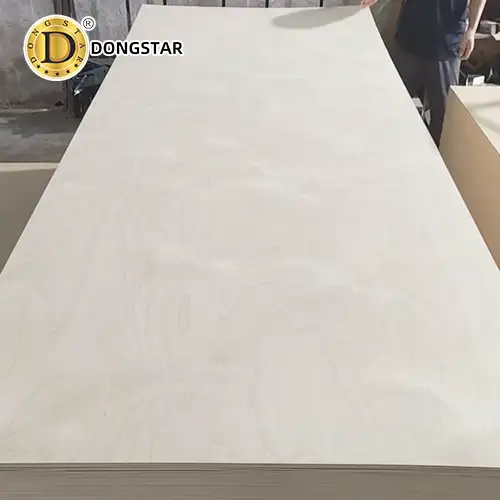
What is 1250×2500 plywood?
1250×2500 plywood is a plywood sheet with a nominal length of 2,500mm and a nominal width of 1,250mm.
In metric notation, it is normally written as 1250×2500mm plywood.
The total face area of one nominal sheet is:
1.25m × 2.50m = 3.125m²
That gives the sheet a larger working area than a standard 1220×2440mm panel, which has approximately 2.977m² of nominal surface area.
For high-volume buyers, this difference may look small on one sheet. Across hundreds or thousands of sheets, however, the additional usable area can become commercially relevant.
What does 1250x2500mm mean?
The two dimensions describe the nominal sheet width and length. However, buyers should always confirm the manufacturer’s actual tolerance.
A professional RFQ should therefore specify:
Nominal size: 1250×2500mm
Thickness
Thickness tolerance
Core species
Face and back veneer
Glue type
Grade
Moisture requirement
Surface finish
Packaging requirements
This prevents a common purchasing mistake: comparing two plywood quotations that appear similar but actually describe different specifications.
Why do buyers choose larger plywood sheets?
Larger sheets can be useful when the final component is large enough to benefit from fewer joints or less cutting.
Potential advantages include:
Larger usable panel area
Fewer seams in certain applications
Better cutting efficiency for large components
Potentially lower material waste
Greater flexibility for CNC cutting
Useful format for selected furniture and construction applications
The key is to compare the sheet size with the buyer’s cutting plan.
Is 1250×2500 plywood a standard size?
1250×2500mm is a commonly manufactured large-format plywood size, but it should not automatically be considered a universal standard size in every country or plywood specification.
Plywood dimensions vary by market, manufacturer, application and production line.
In Europe, buyers may encounter metric sheet sizes such as 1250×2500mm alongside 1220×2440mm and other formats.
European and international size considerations
European projects often use metric dimensions, making 1250×2500mm a convenient format for many applications.
However, “standard size” can mean different things:
A common industry size
A manufacturer’s regular production size
A customer’s preferred size
A size routinely stocked by a distributor
These aren’t necessarily the same.
For bulk orders, a plywood manufacturer can often produce or supply a particular size more efficiently than a trading company that simply buys whatever is available.
Why buyers should confirm actual sheet dimensions
Before placing a container order, ask the supplier to confirm:
Actual finished dimensions
Dimensional tolerance
Thickness tolerance
Squareness
Edge condition
Number of sheets per package
For European importers, this simple step can prevent problems during CNC processing, installation and downstream manufacturing.
What is 1250×2500 plywood used for?
The answer depends on the plywood grade and construction.
1250×2500 plywood can be used for furniture, cabinetry, interior components, construction-related applications, packaging and other industrial uses when its technical specification is appropriate.
It should not be assumed that every 1250×2500 panel is suitable for structural or exterior use.
Furniture and cabinetry
Large-format plywood can be attractive to furniture manufacturers because it provides more cutting options.
Typical applications may include:
Cabinets
Shelving
Furniture components
Tables
Storage systems
Interior panels
CNC-machined components
For furniture production, buyers normally pay close attention to surface quality, core construction, thickness tolerance and machining performance.
Construction and interior applications
Depending on the plywood specification, 1250×2500mm panels may be used for:
Wall components
Flooring substrates
Interior construction
Temporary structures
General building applications
For structural applications, the buyer should specify the required performance class and relevant standards rather than simply ordering “construction plywood.”
Packaging and industrial applications
Plywood is also used for:
Industrial packaging
Export crates
Machinery bases
Protective panels
Industrial components
For these applications, price, strength-to-weight ratio and machining efficiency can be more important than decorative surface appearance.
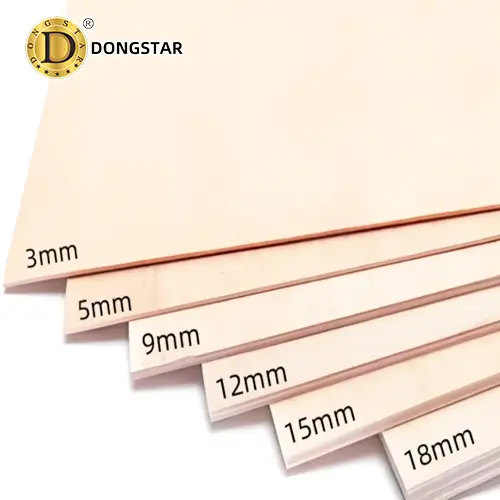
What thickness is available in 1250×2500 plywood?
The 1250×2500 plywood format can be manufactured in multiple thicknesses.
For B2B orders, commonly requested options include:
| Thickness | Typical consideration |
|---|---|
| 12mm plywood | Lighter panels, furniture and general applications |
| 15mm plywood | Balance of weight and rigidity |
| 18mm plywood | Higher stiffness and demanding applications |
Availability depends on the plywood type, core construction, production line and order quantity.
12mm plywood
12mm 1250×2500 plywood can be useful when buyers want to control panel weight while maintaining reasonable rigidity.
It may be considered for furniture parts, interior panels and selected industrial applications.
15mm plywood
15mm plywood 1250×2500 provides a useful middle ground between weight, stiffness and material consumption.
For many B2B applications, this can be an efficient thickness when 12mm is too light and 18mm is unnecessary.
18mm plywood
18mm plywood 1250×2500 is often selected when greater panel stiffness is required.
It can be relevant to furniture manufacturing, construction components and other applications where thicker plywood provides practical advantages.
How to choose the right thickness
Don’t choose thickness based only on price.
Consider:
Span
Load
Fixing method
Cutting pattern
Final application
Panel weight
Required stiffness
Applicable technical standard
A good supplier should be able to recommend a specification based on the buyer’s actual application.
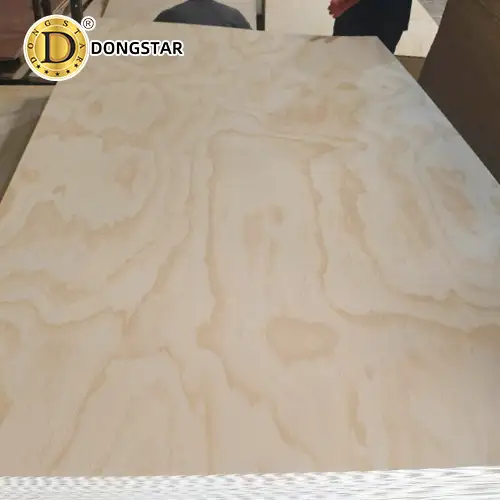
Is 1250×2500 plywood suitable for Europe?
Yes, 1250×2500 plywood can be suitable for European markets, provided the product meets the technical, safety, environmental and documentation requirements of the intended application and destination market.
The sheet size itself doesn’t determine EU suitability.
European importers should evaluate the complete product specification.
Quality and technical specifications
Depending on the application, buyers may need to review:
Plywood grade
Wood species
Veneer construction
Bonding performance
Moisture
Formaldehyde/emission requirements
Thickness tolerance
Surface quality
Mechanical properties
Relevant European standards or project specifications
For structural use, buyers should pay particular attention to the required performance classification.
Documentation and timber compliance
EU buyers should also consider current timber-product requirements.
The EU Deforestation Regulation (EUDR) is especially important for companies importing relevant wood products into the European market.
The European Commission provides current information through its official EUDR resources.
Importers should verify the rules applicable to their particular product, supply chain and transaction rather than relying on a generic supplier statement.
Why supplier selection matters
Two plywood sheets with exactly the same nominal dimensions can have very different commercial value.
One may have:
Better bonding
More consistent thickness
Better core construction
Better surface quality
More reliable packaging
Stronger documentation
For European B2B buyers, supplier quality control is therefore just as important as the sheet dimension.
What is the difference between 1220×2440 and 1250×2500 plywood?
The most obvious difference is size.
| Specification | 1220×2440mm | 1250×2500mm |
|---|---|---|
| Nominal width | 1.22m | 1.25m |
| Nominal length | 2.44m | 2.50m |
| Approx. sheet area | 2.977m² | 3.125m² |
| Relative area | Baseline | About 5% larger |
| Common use | General plywood applications | Larger components and selected B2B applications |
The 1250×2500mm sheet has approximately 4.97% more nominal surface area than a 1220×2440mm sheet.
That doesn’t automatically mean it is the better choice.
Size and usable surface area
Imagine a furniture manufacturer cutting large cabinet components.
If the components fit more efficiently on a 1250×2500mm panel, the larger sheet may reduce offcuts.
But if the cutting plan is optimized around 1220×2440mm, changing dimensions could actually increase waste.
The best size is the one that works best with your cutting pattern.
Container loading and logistics
Sheet dimensions also affect:
Pallet configuration
Packaging
Container loading
Warehouse handling
Forklift operations
Local transportation
A professional quotation should therefore include not only the price per sheet but also:
Sheets per package + packages per container + total m³ + gross weight + loading configuration.
This makes supplier comparisons much more accurate.
Which size should European buyers choose?
Choose 1250×2500mm plywood when:
Your components benefit from larger panels
Your CNC cutting plan suits the dimensions
You want more nominal surface area per sheet
Your supplier can provide consistent production
Logistics work with the larger format
Choose 1220×2440mm plywood when:
Your existing cutting plans use this format
Your machinery is optimized for it
Local customers expect this size
The smaller sheet provides better container or warehouse efficiency
For large B2B orders, ask your plywood supplier to compare both formats based on cost per usable square metre, not simply cost per sheet.
How to Buy 1250×2500 Plywood from Vietnam
For European importers, buying directly from a Vietnam plywood manufacturer can be attractive when the order volume is large enough to justify factory sourcing.
A good RFQ should contain:
Product: Plywood type
Size: 1250×2500mm
Thickness: 12mm / 15mm / 18mm or required specification
Core: Required wood species/construction
Face/back: Required veneer grade
Glue: Required bonding specification
Quantity: Sheets or m³
Destination: European port
Packaging: Export packaging requirements
Documents: Required test reports/certificates
Application: Furniture, construction, packaging, etc.
The more detail you provide, the easier it is for a Vietnam plywood supplier to give you a useful quotation.
A practical tip for importers
Don’t compare suppliers using only FOB price.
Compare:
Product cost + freight + duty/tax + inspection + documentation + expected waste + quality risk.
This is the real landed-cost calculation.
1250×2500 Plywood Buying Checklist for EU Importers
Before confirming a bulk order, check the following:
Exact 1250×2500mm dimensions confirmed
Thickness and tolerance confirmed
Core species confirmed
Face/back grade confirmed
Glue specification confirmed
Intended application communicated
Product test documents reviewed
Timber-traceability information reviewed
Packaging confirmed
Container loading plan confirmed
Pre-shipment inspection considered
Final landed cost calculated
Sample approved before mass production
For repeat orders, keep an approved sample or reference specification. This gives both buyer and supplier a clear benchmark for future shipments.
FAQs
Yes. A 1250×2500mm sheet has approximately 5% more nominal surface area than a 1220×2440mm sheet.
It is a commonly manufactured metric format, but it shouldn't be treated as a universal mandatory European standard. Availability and preferred dimensions vary by market, manufacturer and application.
Yes, 18mm 1250×2500 plywood can be supplied for suitable applications, subject to the manufacturer's production range and order requirements.
It can be an excellent format for furniture manufacturing when the plywood grade, surface quality, core construction and thickness meet the application's requirements.
Yes, European companies can source plywood from Vietnam. However, importers should verify the applicable customs, timber-traceability, environmental and product requirements for their specific transaction.
Neither size is universally better. The right choice depends on the cutting plan, application, machinery, logistics and total cost per usable square metre.
Final Takeaway
1250×2500 plywood is an important large-format option for European furniture manufacturers, contractors, wholesalers and industrial buyers.
Its approximately 3.125m² nominal sheet area offers nearly 5% more surface than a 1220×2440mm panel, which can be useful when large components or specific cutting patterns are involved.
But size is only one part of the buying decision.
For professional B2B purchasing, the real comparison should include plywood quality, thickness tolerance, core construction, bonding, surface grade, production consistency, documentation and landed cost.
For buyers sourcing from Vietnam, choosing an experienced Vietnam plywood manufacturer can make the process much easier.
Dongstarwood supplies plywood for international B2B customers and can discuss 1250×2500mm plywood in different thicknesses and specifications according to project requirements.
If you’re comparing 1250×2500 plywood vs. 1220×2440 plywood, send Dongstarwood your required thickness, quantity and destination port. The team can help you evaluate the appropriate specification and prepare a factory quotation.
Related Articles
- All Posts
- Company News
- Product Post
For European plywood importers, wholesalers and project contractors, sheet size is more than a simple...
European plywood buyers are facing a new sourcing reality. For years, China was one of...
1250×2500 Plywood Vietnam: The Complete 12mm, 15mm & 18mm Buying Guide for European B2B Buyers...
When ordering plywood by the container, sheet size may look like a small specification. It...
The global plywood market is changing. European construction companies, furniture manufacturers, distributors, and wholesalers are...
Why EU Importers Are Switching to Vietnam Plywood Suppliers Faster Than Ever Over the past...