

1250×2500 Plywood Vietnam: The Complete 12mm, 15mm & 18mm Buying Guide for European B2B Buyers
When European importers search for 1250×2500 plywood Vietnam, they usually aren’t looking for another generic plywood article.
They want answers to practical purchasing questions:
Is 1250×2500mm the right size for my project? Should I buy 12mm, 15mm or 18mm? How much does thickness affect weight and cost? Can a Vietnam plywood manufacturer supply stable quality in container quantities? And what happens if I need a sheet larger than the standard size?
These questions matter when buying plywood by the container rather than by the sheet.
For European project contractors, furniture manufacturers, distributors, wholesalers and importers, the best plywood specification is the one that balances performance, cutting efficiency, logistics, price and long-term supply reliability.
This guide explains how to evaluate 1250×2500 plywood, with particular attention to 12mm, 15mm and 18mm thicknesses, and explains why large-format plywood can sometimes be a better solution for specialized applications.
Why 1250×2500 Plywood Matters to European Buyers
The 1250×2500mm format has an important advantage: it provides a larger metric panel than the familiar 1220×2440mm format.
A 1250×2500mm sheet provides:
1.25m × 2.50m = 3.125m² per sheet.
By comparison:
1.22m × 2.44m = 2.9768m² per sheet.
The 1250×2500mm panel therefore provides approximately 4.98% more surface area per sheet.
That difference may sound small.
For one sheet, it is.
For a 40-foot container containing hundreds of sheets, however, the additional panel area can become commercially meaningful.
But European buyers should avoid a common mistake: more area doesn’t automatically mean lower cost.
Your cutting pattern, container loading, product weight, machining equipment and final application all matter.
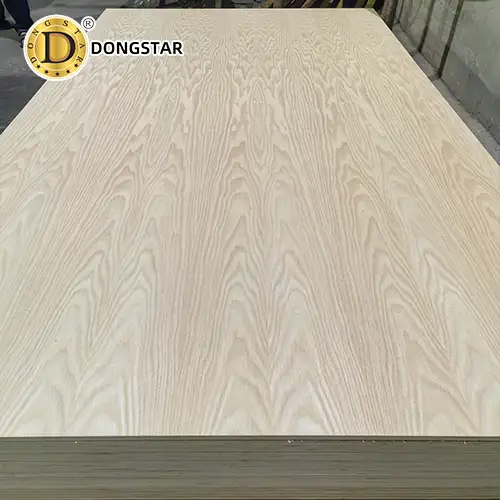
What Makes 1250×2500mm Plywood Different?
The 1250×2500mm format is particularly useful where larger metric panels can reduce joints or improve cutting yield.
Typical applications include:
- Furniture manufacturing
- Cabinets
- Interior panels
- Construction
- Flooring components
- Doors
- Packaging
- Industrial applications
- Large CNC components
- Project-specific panel systems
The important point is that sheet dimensions should be considered together with plywood construction.
A buyer should specify:
- Length
- Width
- Thickness
- Core material
- Face/back veneer
- Glue type
- Grade
- Moisture requirement
- Emission requirement
- Tolerance
- Certification
- Packaging
A supplier who only gives you a price without clarifying these specifications isn’t giving you a truly comparable quotation.
18mm 1250×2500 Plywood: The Heavy-Duty Choice
Among the three thicknesses discussed in this guide, 18mm 1250×2500 plywood is generally the first option to consider when strength, stiffness and durability are important.
At nominal dimensions:
1.25m × 2.50m × 0.018m = 0.05625m³ per sheet.
The actual weight depends heavily on the wood species, core construction, moisture content and manufacturing process.
Common applications include:
- Furniture structures
- Shelving
- Work surfaces
- Construction components
- Heavy-duty packaging
- Industrial applications
- CNC-machined components
For furniture manufacturers, 18mm plywood is often selected for structural parts where thinner panels would not provide the required rigidity.
For construction buyers, however, thickness alone does not establish whether a plywood panel is structurally suitable.
The buyer should also confirm the relevant structural grade, bonding performance, veneer construction and applicable standards.
When should you choose 18mm?
Choose 18mm when the application needs:
- Greater stiffness
- Better screw-holding performance
- More substantial panel construction
- Higher resistance to bending under load
If the finished product doesn’t need this level of thickness, using 18mm everywhere may simply add unnecessary material and transportation weight.
15mm 1250×2500 Plywood: A Practical Middle Ground
15mm 1250×2500 plywood sits between the lighter 12mm panel and the heavier 18mm panel.
That makes it useful when buyers want a balance between:
- Strength
- Weight
- Cost
- Machining
- Material consumption
Typical applications can include:
- Furniture panels
- Shelves
- Cabinets
- Interior construction
- General woodworking
- Industrial components
For many projects, 15mm can be an economical compromise.
However, don’t select 15mm simply because it sits between two other thicknesses.
The correct question is:
What thickness does the finished application actually require?
If an engineering specification calls for 18mm, replacing it with 15mm purely to reduce cost may create performance problems.
Conversely, if 12mm is sufficient, specifying 18mm may unnecessarily increase the material budget.
12mm 1250×2500 Plywood: Lightweight and Efficient
12mm 1250×2500 plywood is useful when weight and material efficiency are more important than maximum panel stiffness.
Typical applications include:
- Furniture components
- Interior panels
- Cabinet components
- Decorative applications
- Lightweight structures
- Packaging
- General woodworking
At 12mm, a 1250×2500mm panel has a nominal volume of:
1.25 × 2.50 × 0.012 = 0.0375m³ per sheet.
Again, actual product weight depends on the wood species and plywood construction.
For European distributors, 12mm plywood can be attractive because it allows customers to choose a lighter panel where the application doesn’t justify a thicker product.
12mm vs 15mm vs 18mm Plywood: Which Should You Choose?
Here’s the simple comparison:
| Feature | 12mm | 15mm | 18mm |
|---|---|---|---|
| Relative weight | Low | Medium | Higher |
| Material consumption | Low | Medium | Higher |
| Panel stiffness | Moderate | Higher | Highest of the three |
| Typical use | Lightweight applications | General furniture/interior | Heavy-duty applications |
| Handling | Easier | Moderate | More demanding |
| Potential shipping cost | Lower | Medium | Higher |
| Best for | Weight-sensitive products | Balanced requirements | Strength-focused applications |
These are general comparisons.
The actual performance of plywood depends on far more than thickness.
For example, a well-constructed 15mm panel with appropriate veneers and bonding can outperform a poorly manufactured 18mm panel in a particular application.
That’s why professional procurement teams should evaluate the complete plywood specification, not thickness alone.
Strength and Stiffness
Thickness has a major influence on stiffness, but plywood is an engineered wood panel.
Its performance also depends on:
- Veneer quality
- Veneer thickness
- Grain direction
- Number of plies
- Core construction
- Adhesive system
- Pressing process
- Moisture content
- Manufacturing tolerances
For structural applications, request technical data rather than relying on marketing descriptions such as “strong plywood.”
Weight and Handling
If a project involves a lot of manual handling, 12mm plywood can have a practical advantage.
If the project involves heavy-duty furniture or structural components, 18mm may be more appropriate.
For importers, thickness also affects:
- Total container weight
- Number of sheets required
- Labor costs
- Storage requirements
- Handling equipment
Therefore, the cheapest sheet price isn’t necessarily the cheapest solution.
Price and Material Efficiency
A good B2B comparison should calculate at least three prices:
Price per sheet
Price per square metre
Price per cubic metre
This prevents a common purchasing mistake.
A supplier offering a lower price per sheet may actually be more expensive per square metre if the dimensions are different.
For large orders, buyers should also compare the complete landed cost, including:
- Product price
- Packaging
- Inland transport
- Ocean freight
- Insurance where applicable
- Import duties/taxes
- Port charges
- Local delivery
1250×2500 Plywood for Furniture Manufacturing
Furniture manufacturers often benefit from larger panels because cutting patterns can sometimes be optimized more efficiently.
Imagine a manufacturer producing:
- Cabinet sides
- Doors
- Shelves
- Table components
- Furniture partitions
The correct panel size depends on the cutting list.
For example, if a production line repeatedly cuts large components close to 2.4m in length, a 2500mm panel may offer more usable material.
But if the majority of components are designed around 1220×2440mm sheets, changing to 1250×2500mm may not necessarily improve yield.
The best approach is to compare actual cutting layouts.
A professional plywood manufacturer Vietnam buyer should provide the factory with a representative cutting list and ask for recommendations before committing to a large-volume order.
1250×2500 Plywood for Construction Projects
Construction buyers normally focus on:
- Strength
- Thickness
- Bonding quality
- Surface quality
- Moisture resistance
- Dimensional stability
- Project specifications
For construction-related plywood, the adhesive specification is especially important.
Depending on the intended application, buyers may encounter terms such as:
- MR
- E1
- WBP
- Phenolic
- Exterior-grade bonding
These terms should not be treated as interchangeable.
The supplier should provide the exact technical specification and testing information applicable to the product being quoted.
For structural use in Europe, buyers should also confirm which standards and conformity requirements apply to their particular project.
1250×2500 Plywood for European Wholesale Buyers
For wholesalers, the decision is slightly different.
A wholesaler isn’t buying for one project.
They’re buying inventory for multiple customers.
That means standardization becomes valuable.
A European distributor may want:
- 12mm for lighter furniture
- 15mm for general applications
- 18mm for heavier applications
Offering all three thicknesses in the same 1250×2500mm format can simplify inventory management.
It also makes product catalogs easier for downstream customers to understand.
For this reason, a 1250×2500 plywood supplier capable of maintaining consistent dimensions across different thicknesses can provide a practical advantage.
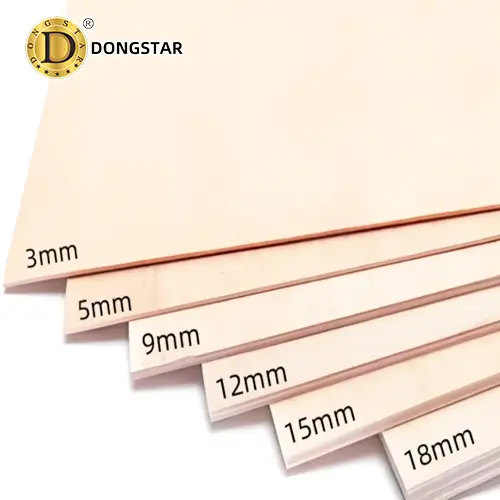
How to Buy 1250×2500 Plywood from Vietnam
When buying from a Vietnam plywood manufacturer, follow a simple process.
Step 1: Define the specification
State:
- 1250×2500mm
- 12mm / 15mm / 18mm
- Core
- Face/back
- Glue
- Grade
- Tolerance
- Certification
- Quantity
Step 2: Request samples
Don’t evaluate a container order from a quotation alone.
Request representative samples.
Step 3: Check the factory
Ask about:
- Production capacity
- Equipment
- Quality control
- Export experience
- Raw-material sourcing
Step 4: Confirm commercial terms
Clarify:
- MOQ
- FOB/CIF terms
- Production time
- Payment terms
- Packaging
- Loading plan
Step 5: Inspect before shipment
For a large B2B order, consider pre-shipment inspection.
Check:
- Dimensions
- Thickness
- Surface
- Bonding
- Moisture
- Quantity
- Packaging
Step 6: Review loading
Ask for photographs and the final packing list.
This simple process can significantly reduce purchasing risk.
What European Importers Should Check Before Ordering
A serious Vietnam plywood supplier should be able to answer questions about:
Product
- What species are used?
- What is the core construction?
- What glue is used?
- What thickness tolerance applies?
- What is the moisture range?
Factory
- Where is production located?
- What is the monthly capacity?
- What markets does the factory export to?
- What quality-control process is used?
Compliance
Depending on the product and destination, buyers may need documentation related to:
- FSC
- Timber legality
- Product emissions
- Applicable European standards
- Construction-product requirements
For timber products entering the EU, buyers should also distinguish current legal requirements from the older EUTR terminology and check the applicable EU Deforestation Regulation (EUDR) requirements and implementation dates for their specific supply chain.
An official starting point is the European Commission’s EUDR information.
Don’t accept a supplier’s statement that a product is “EU compliant” without asking what documentation supports that claim.
Plywood Specifications Buyers Should Put in the Purchase Order
A professional PO should be much more detailed than:
“1250×2500 plywood, 18mm.”
A better specification would look like:
| Item | Example |
|---|---|
| Product | Commercial Plywood |
| Size | 1250×2500mm |
| Thickness | 18mm |
| Core | As agreed |
| Face/Back | As agreed |
| Glue | As specified |
| Emission class | As required |
| Tolerance | Contract specification |
| Certification | FSC, if required |
| Quantity | Container/full order |
| Packaging | Export standard |
| Inspection | Pre-shipment inspection |
| Destination | European port |
This gives both parties a clear reference.
It also makes future repeat orders much easier.
Container Loading, Packaging and Logistics
Dimensions affect logistics.
A 1250×2500mm sheet has a surface area of 3.125m², and thickness affects its cubic volume.
For example:
12mm
Approximately:
0.0375m³/sheet
15mm
Approximately:
0.046875m³/sheet
18mm
Approximately:
0.05625m³/sheet
These are theoretical geometric volumes before considering packaging.
Actual container loading depends on:
- Pallet design
- Stack height
- Packaging
- Container type
- Weight limitations
- Supplier loading method
Therefore, don’t calculate container quantity using theoretical volume alone.
Ask your supplier for a real loading plan based on the actual pallet configuration.
Why Choose a Vietnam Plywood Manufacturer?
Vietnam has become an important wood-product manufacturing base for international markets.
For European B2B buyers, potential advantages include:
- Competitive manufacturing costs
- Export-oriented factories
- Flexible OEM production
- Multiple plywood species
- Customized dimensions
- Container-volume supply
- Access to major Asian shipping routes
The key is to distinguish between a trading company and a genuine plywood factory Vietnam buyer can verify.
A manufacturer should be able to explain how the product is made, inspected and packed.
Why Dongstar Wood for 1250×2500 Plywood?
Dongstar Wood focuses on plywood supply for international B2B customers, including importers, distributors, wholesalers, furniture manufacturers and project buyers.
The company can support standard plywood specifications such as:
- 1250×2500mm
- 12mm
- 15mm
- 18mm
Depending on the product, buyers can also discuss:
- Core options
- Face veneer options
- Glue requirements
- Surface grades
- OEM specifications
- Packaging
- Customized dimensions
For a large-volume buyer, this flexibility matters.
A supplier who can provide several thicknesses and sizes can make it easier to consolidate purchasing rather than splitting orders between multiple factories.
Beyond Standard Sheets: Large-Format Plywood up to 1830×3830mm
This is where Dongstar Wood can offer an important solution for buyers with non-standard requirements.
Standard plywood sizes work well for many applications, but they’re not ideal for every project.
Some customers need significantly larger panels to reduce:
- Joints
- Cutting waste
- Assembly work
- Panel connections
Dongstar Wood can also supply large-format plywood with maximum dimensions up to approximately 1830×3830mm, subject to product type, construction, thickness, production feasibility and order requirements.
This can be particularly interesting for:
- Large furniture components
- Architectural panels
- Industrial applications
- Large CNC components
- Construction projects
- Specialized OEM production
Large-format plywood shouldn’t be treated as simply “a bigger standard sheet.”
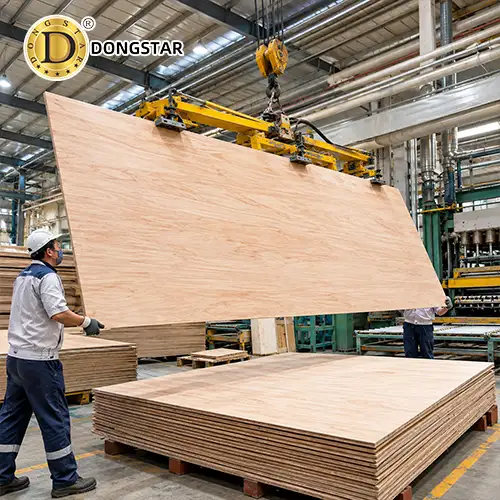
Production, pressing equipment, veneer availability, handling and transportation all become more demanding.
Therefore, buyers should provide the manufacturer with the exact required dimensions and application before requesting a quotation.
Standard Size vs Large Format
| Requirement | Standard Plywood | Large-Format Plywood |
|---|---|---|
| Typical size | 1220×2440 / 1250×2500mm | Up to approx. 1830×3830mm |
| Availability | Broad | Project dependent |
| Handling | Easier | Requires planning |
| Large panels | Limited | Strong advantage |
| Joints | More possible | Can reduce joints |
| OEM suitability | Good | Excellent for specialized orders |
| Best for | General B2B supply | Large/custom projects |
For European project buyers, this means you don’t have to redesign a product around a standard sheet if the application genuinely requires a larger panel.
Ask the factory first.
FAQs
1250×2500 plywood is used in furniture, cabinetry, interior panels, construction, industrial products, packaging and other applications where a larger metric sheet is useful.
Not necessarily. 18mm generally provides greater thickness and stiffness, but 15mm may be sufficient for applications where lower weight and material consumption are more important.
The primary difference is thickness, which affects stiffness, weight, material consumption and suitability for different applications. Actual performance also depends on plywood construction and quality.
Yes. Vietnam has export-oriented plywood manufacturers capable of supplying container-volume orders. Buyers should verify factory capability, specifications, quality control and export documentation.
Ask about raw materials, core construction, glue, thickness tolerance, production capacity, certifications, packaging, loading plans, inspection procedures and export experience.
Yes, Dongstar Wood can discuss these thicknesses in 1250×2500mm specifications, subject to the specific plywood product and production requirements.
Final Recommendation for European Plywood Buyers
If you’re sourcing plywood for a European project or wholesale business, don’t start with price.
Start with the application.
Then determine:
Size → Thickness → Core → Glue → Grade → Certification → Quantity → Logistics → Landed Cost
For many standard applications, 1250×2500mm plywood provides a useful larger metric format.
If weight is important, 12mm may be the appropriate starting point.
If you need a balance between strength and weight, consider 15mm.
If the application demands greater stiffness and a more substantial panel, 18mm may be the better choice.
But Dongstar Wood’s capabilities don’t stop at standard sizes.
Dongstar Wood can supply conventional plywood sizes such as 1250×2500mm and can also discuss large-format plywood up to approximately 1830×3830mm for qualified projects and customized orders.
For European importers, wholesalers and project contractors, that means the purchasing conversation doesn’t have to end with a standard 1250×2500mm panel.
If your project requires a special size, thickness or construction, send the manufacturer the exact dimensions, application, quantity and technical requirements. That’s the fastest way to determine whether a standard panel or large-format plywood is the better commercial solution.
Related Articles
- All Posts
- Company News
- Product Post
For European plywood importers, wholesalers and project contractors, sheet size is more than a simple...
European plywood buyers are facing a new sourcing reality. For years, China was one of...
When ordering plywood by the container, sheet size may look like a small specification. It...
The global plywood market is changing. European construction companies, furniture manufacturers, distributors, and wholesalers are...
Why EU Importers Are Switching to Vietnam Plywood Suppliers Faster Than Ever Over the past...
How to Reduce Costs When Importing Plywood from Vietnam Without Sacrificing Quality As global...