

If you are planning to Import Plywood for a construction or infrastructure project in Europe, Vietnam is likely already on your radar.
Over the last few years, Vietnam Plywood has become one of the most searched sourcing options among EU buyers. Not just because of price—but because of compliance, quality stability, and fewer trade risks compared to traditional suppliers.
Still, many project buyers face the same problem:
They know Vietnam is a good option… but they don’t know how to import plywood correctly without delays, compliance issues, or hidden costs.
This guide breaks it down clearly—step by step—based on real sourcing practices.
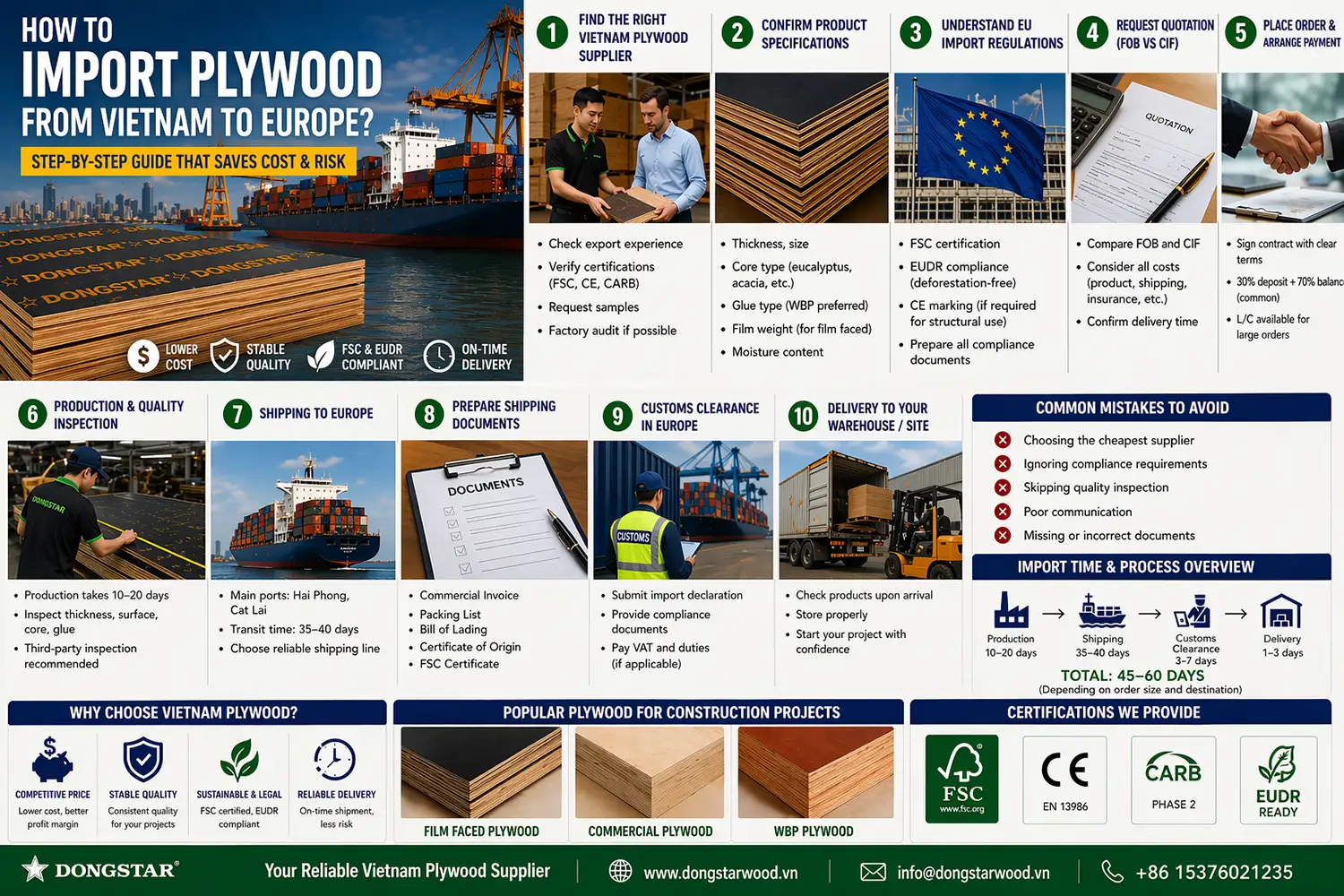
1. Why EU Buyers Are Choosing Vietnam Plywood
Before diving into the process, it’s important to understand why demand is rising.
Key reasons:
- Competitive pricing compared to China
- Strong compliance (FSC, CE, CARB)
- Stable supply chains
- No anti-dumping duties in most EU markets
Vietnam has positioned itself as a low-risk sourcing hub for plywood—especially for construction-grade products like film faced plywood.
For EU contractors, this means:
- Easier import procedures
- Lower compliance risk
- More predictable project costs
2. Step 1: Identify the Right Vietnam Plywood Supplier
This is the most critical step.
Not all suppliers are equal, and choosing the wrong one can lead to:
- Delays
- Quality issues
- Financial loss
What to check:
- Export experience to Europe
- Certifications (FSC, CE, CARB)
- Product range (film faced plywood, commercial plywood)
- Factory vs trading company
Vietnam plywood supplier should provide:
- Product specs
- Test reports
- Real shipment references
If possible, request:
- Sample panels
- Factory audit photos
3. Step 2: Confirm Product Specifications
Many buyers skip this step—and regret it later.
Key specifications to confirm:
- Thickness (usually 12mm–21mm)
- Core type (eucalyptus, acacia, mixed)
- Glue type (WBP phenolic is preferred)
- Film weight (for film faced plywood)
- Moisture content
For construction use, always choose:
- WBP glue (waterproof)
- Hardwood core for strength
This ensures better durability and reuse cycles.
4. Step 3: Understand EU Import Regulations (EUDR & FSC)
This is where many imports fail.
Essential compliance requirements:
- FSC certification (sustainable sourcing)
- EUDR (deforestation-free supply chain)
- CE marking (for structural applications)
Failure to comply can result in:
- Shipment rejection
- Fines
- Project delays
Always confirm that your supplier can provide:
- FSC certificate
- Chain of custody documents
- Origin verification
5. Step 4: Request Quotation (FOB vs CIF)
When you request a quote, you’ll typically see:
FOB (Free on Board):
- Supplier handles production
- You manage shipping
CIF (Cost, Insurance, Freight):
- Supplier includes shipping cost
- Easier for beginners
Typical pricing factors:
- Thickness and size
- Glue type
- Film quality
- Order quantity
For most EU buyers, CIF is simpler—especially for first-time imports.
6. Step 5: Place Order & Arrange Payment
Common payment terms:
- 30% deposit + 70% before shipment
- L/C (Letter of Credit) for large orders
Pro tip:
Always include:
- Product specifications
- Quality standards
- Delivery timeline
in your contract.
7. Step 6: Production & Quality Inspection
Production usually takes:
- 10–20 days depending on order size
Before shipment, always conduct inspection.
Inspection checklist:
- Thickness accuracy
- Surface quality
- Core structure
- Glue bonding strength
You can:
- Hire a third-party inspection company
- Or request detailed inspection reports
8. Step 7: Shipping to Europe
Main shipping route:
- Hai Phong → Rotterdam / Hamburg / Antwerp
Transit time:
- Around 35–40 days
Required documents:
- Commercial Invoice
- Packing List
- Bill of Lading
- Certificate of Origin
- FSC certificate
Make sure all documents match exactly.
9. Step 8: Customs Clearance in Europe
Once the shipment arrives:
You need to:
- Submit import declaration
- Provide compliance documents
- Pay VAT and duties (if applicable)
Working with a customs broker is highly recommended.
10. Common Mistakes to Avoid
Many buyers lose money due to simple mistakes.
Top risks:
- Choosing cheapest supplier
- Ignoring compliance documents
- Skipping quality inspection
- Poor communication
Smart approach:
total cost, not just price.
FAQs: What EU Buyers Ask Before Importing
1. What is the minimum order quantity?
Usually 1 container (20GP or 40HQ).
2. How long does the whole process take?
Typically 45–60 days from order to delivery.
3. Is Vietnam plywood better than Chinese plywood?
In many cases, yes—especially in compliance and stability.
4. Can I customize specifications?
Yes, most Vietnam suppliers offer customization.
5. Do I need FSC certification to import?
Highly recommended, especially under EUDR.
6. What is the best plywood for construction?
Film faced plywood with WBP glue and hardwood core.
Conclusion: Import Plywood from Vietnam the Right Way
Vietnam Plywood is not complicated—but it must be done correctly.
If you follow the right steps:
- Choose the right supplier
- Confirm specifications
- Ensure compliance
- Control quality
You can significantly reduce risks and costs.
For EU project buyers, Vietnam is no longer just an option—it’s a strategic sourcing choice.