

Introduction: Why This Comparison Matters in 2026
If you are sourcing plywood for European projects in 2026, the question is no longer just about quality—it’s about supply stability, compliance, and total project cost.
Search trends across Europe show rising demand for:
- “birch plywood alternative EU”
- “poplar plywood vs birch plywood”
- “FSC plywood Vietnam supplier”
This shift is driven by:
- Supply shortages from traditional Baltic regions
- Price increases of 30–50% since 2021
- Increasing pressure from EUDR and sustainability regulations
As a result, Vietnam Birch Plywood and Bleached Poplar Plywood have become two of the most searched and evaluated materials among EU importers.
But which one is actually better for your project?
Let’s break it down in a practical, no-nonsense way.
1. What Is Vietnam Birch Plywood?
Vietnam Birch Plywood is typically made using:
- Birch face veneer
- Core materials like eucalyptus or rubberwood
- Multi-layer construction for strength
Key Features:
- High density (strong load-bearing capacity)
- Excellent screw holding
- Clean CNC machining performance
- FSC, CARB P2, E0/E1 compliance available
European buyers increasingly choose Vietnam Birch Plywood because it offers:
- Comparable performance to Baltic birch
- Lower cost (20–45% savings)
- More stable supply chains
This makes it ideal for:
- Furniture manufacturing
- Structural interior applications
- CNC processing
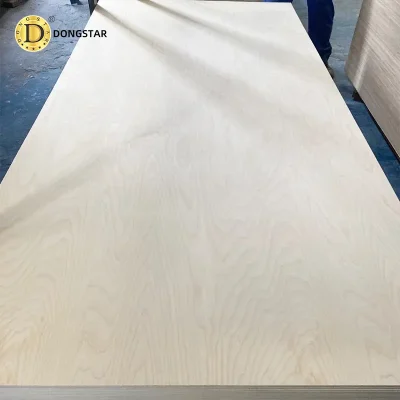
2. What Is Bleached Poplar Plywood?
Bleached Poplar Plywood is a lightweight panel with:
- White bleached poplar face veneer
- Light-density core (typically 480–520 kg/m³)
Key Features:
- Very light weight
- Smooth, bright surface
- Easy to paint, laminate, or veneer
- Cost-efficient
It’s widely used in:
- Cabinet interiors
- Decorative panels
- Furniture backing and shelving
For many EU manufacturers, it serves as a cost-effective alternative where high structural strength is not required.

3. Vietnam Bleached Poplar Plywood vs Birch Plywood: Core Differences
PRODUCT COMPARISON TABLE
| Attribute | Vietnam Birch Plywood | Bleached Poplar Plywood |
|---|---|---|
| Density | High (600–700 kg/m³) | Low (480–520 kg/m³) |
| Strength | Excellent | Moderate |
| Weight | Heavy | Lightweight |
| Surface Finish | Natural wood grain | Bright white, uniform |
| CNC Performance | Excellent | Good |
| Cost | Medium | Low |
| Best Use | Structural & furniture | Interior panels & decorative |
4. Strength vs Weight: What Matters for Your Project
If your project involves:
- Load-bearing structures
- High durability requirements
- Long lifecycle furniture
→ Vietnam Birch Plywood is the better choice
However, if your priority is:
- Easy handling
- Reduced shipping cost
- Lightweight furniture
→ Bleached Poplar Plywood wins
5. Cost Comparison: Where You Save More
Cost is one of the biggest drivers for EU buyers today.
Birch Plywood:
- Higher initial cost
- Better long-term durability
- Lower replacement frequency
Poplar Plywood:
- 25–40% cheaper FOB pricing
- Lower transportation cost (lighter weight)
- Ideal for large-volume projects
Insight:
For high-volume interior projects, switching to poplar can significantly improve margins.
6. EU Compliance & Sustainability (Critical in 2026)
European buyers now prioritize:
- FSC certification
- EUDR traceability
- Low formaldehyde emissions
Vietnam manufacturers have adapted quickly:
- FSC-certified supply chains
- CARB P2 / E0 glue systems
- Full documentation for EU import
This is one of the key reasons Vietnam has become a strategic sourcing hub
7. Supply Stability: The Hidden Decision Factor
Since 2022:
- Russian birch plywood supply has been restricted
- EU buyers face longer lead times (8–14 weeks)
Vietnam offers:
- Stable production capacity
- Faster shipping cycles
- Flexible order sizes
For project-based buyers, this is often more important than price.
8. Application Scenarios: Which One Should You Choose?
Choose Vietnam Birch Plywood if:
- You need strength and durability
- The product must handle mechanical stress
- You require CNC precision
Choose Bleached Poplar Plywood if:
- The panel is not load-bearing
- You need a clean white surface
- Cost efficiency is critical
9. Real EU Buyer Insight (Market Behavior)
European manufacturers are not replacing birch entirely.
Instead, they are:
- Using birch plywood for structural parts
- Using poplar plywood for non-visible components
This hybrid approach helps:
- Reduce costs
- Maintain quality
- Optimize performance
10. Key Decision Framework (Simple Checklist)
Ask yourself:
- Does this panel carry weight?
- Is surface appearance important?
- What is the cost target?
- Are EU compliance documents required?
- What is the project volume?
If most answers point to performance → Birch
If most point to cost & appearance → Poplar
FAQs
1. Is Bleached Poplar Plywood strong enough for furniture?
Yes, for non-structural parts like cabinet interiors and shelves.
2. Can Vietnam Birch Plywood replace Baltic birch?
In most applications, yes—especially for furniture and CNC use.
3. Which plywood is better for export to Europe?
Both are suitable if FSC and EUDR requirements are met.
4. Is poplar plywood cheaper than birch plywood?
Yes, typically 25–40% cheaper.
5. Which is better for CNC cutting?
Birch plywood performs better due to higher density.
6. Can I combine both materials in one project?
Yes, many EU manufacturers use both strategically.
Conclusion: Which Is Better?
There is no one-size-fits-all answer.
- Vietnam Birch Plywood = strength, durability, performance
- Bleached Poplar Plywood = cost efficiency, lightweight, versatility
For most EU B2B buyers in 2026, the smartest strategy is not choosing one—but using both wisely.